
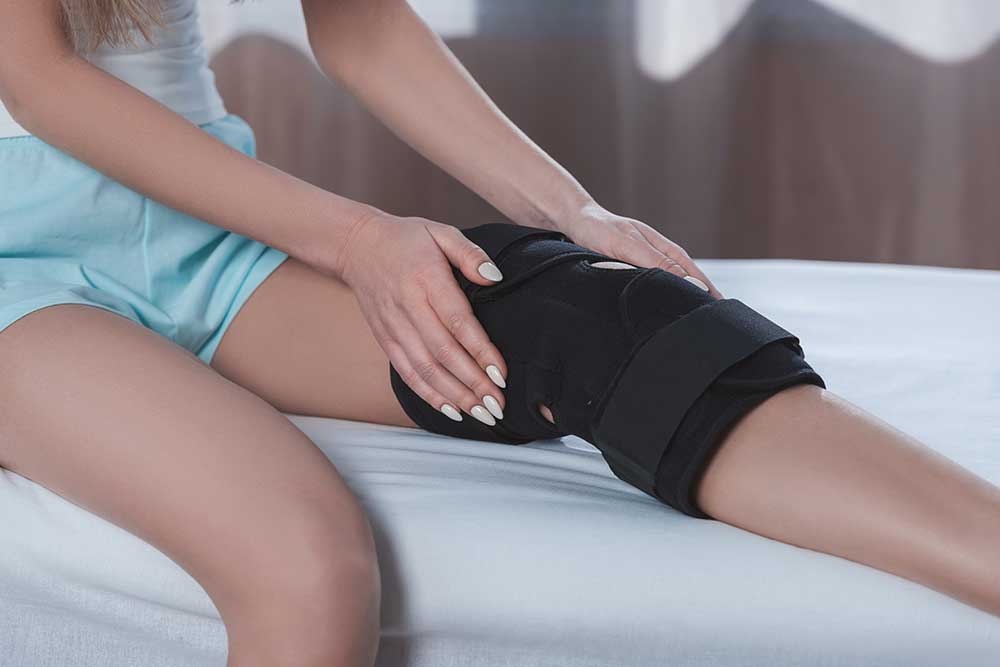
Brace for It-How Can a Knee Brace Help Relieve Pain?
Knee pain, while bothersome, doesn’t have to translate to major surgery. In fact, surgical intervention should be the very last resort. When it comes to knee pain, some simple, non-invasive approaches can be just as effective in relieving discomfort during day-to-day activities.
Whether your pain stems from arthritis or an injury, the right brace can make all the difference.
How Does a Knee Brace Work?
The proper knee brace does a number of things. For starters, it helps take weight and, in turn, pressure off the joint itself, which eases pain. Braces also stabilize the knee, improving range of motion in the process.
The condition behind your knee pain should help guide you in selecting the best brace. The hallmark of knee osteoarthritis, for example, is a lack of space in between the bones. The right brace can create some much-needed space within the joint to reduce painful friction.
Similarly, if you’re recovering from a damaged ligament or knee cap injury, the ideal brace will support the corresponding area of weakness so that the joint can heal as quickly as possible. According to VeryWell Health, the most common types of knee braces include:
- Knee immobilizers, which prevent movement.
- Patella controllers, which keep the knee cap stable and safe during physical activity.
- Motion controllers, which support knee ligaments to make movement easier.
Getting the Most Out of a Knee Brace
Regardless of why you get a knee brace, the end game is always the same—healing the knee joint so that you can get back to living an active, pain-free lifestyle. This is precisely why blindly selecting a knee brace at random is never a good idea. The right doctor can assess your situation, provide an accurate diagnosis, and recommend a brace that will yield the best results. They can also facilitate complementary non-surgical interventions like physical therapy.
That said, research suggests that opting for a knee brace can render powerful results. According to a 2010 study cited by WebMD, wearing a brace for six months for osteoarthritis is associated with decreased pain, disability and stiffness.
There may be some mental health benefits, as well. There’s a growing body of research suggesting a link between chronic arthritis and depression, according to a 2017 report in The Guardian. It stands to reason that suffering from chronic pain, which can leave you unable to lead an active life, may take a toll that runs deeper than the physical self.
Rejuvinix’s state-of-the-art bracing systems set the gold standard. If you’re looking to heal chronic knee pain without invasive surgery, set up a free informational consult today to determine if a brace is what you’ve been waiting for.