
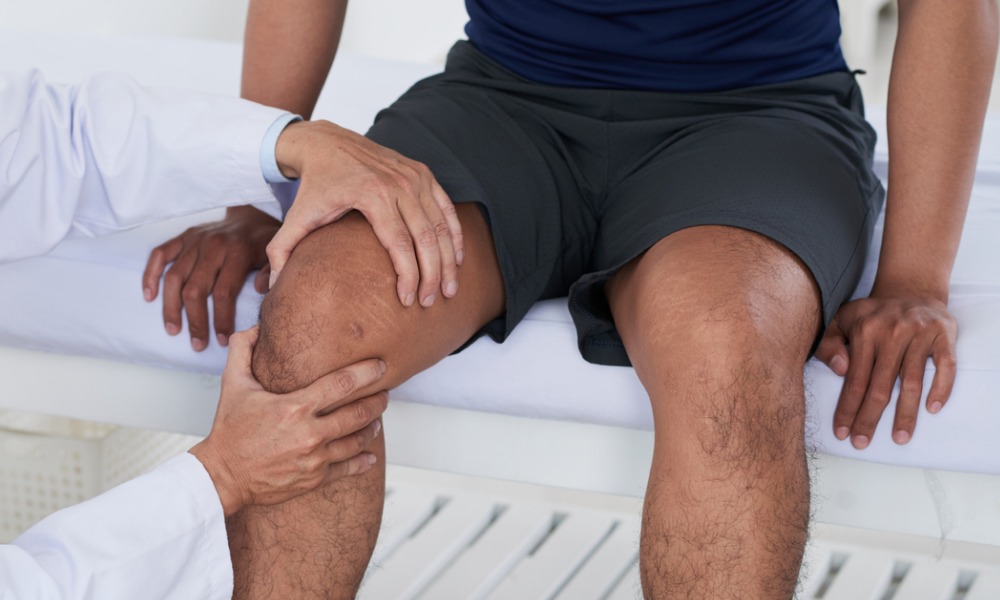
Joint Therapy in Sports Medicine
Sports, exercise, and other rigorous physical activity can result in daily wear and tear on your joints. Joint pain can be a debilitating condition that makes it harder on your daily routine. Over time, the ligaments, bursa, tendons, cartilage, or bone around the joint can suffer injury and result in chronic pain. It is important to determine the cause of your injury to prevent permanent damage. Athletes and physically active individuals can benefit greatly from a sports medicine doctor. The goal of this field is to aid in the prevention and treatment of athletic illnesses and injuries. Sports doctors can also promote physical activity in individuals by offering guidance in exercise routines which can be incredibly beneficial for non-athletes as well.
Factors That May Cause Joint Pain
- Injury – sprained, strained, or torn cartilage, ligaments, or tendons; fractures and dislocations
- Tendonitis – swelling caused by overuse or repetitive activity
- Bursitis – inflammation of the bursa (cushion between tendons, joints, muscles, and bones), due to overuse or injury
- Infection – a bacterial infection that spreads to the bone or joint through the blood
- Inflammation – swelling due to overuse, injury, or joint malfunction/deterioration
- Osteoarthritis – bone on bone friction from worn down cartilage
- Rheumatoid Arthritis – an autoimmune disease that attacks joints, causing them to swell
- Gout – a buildup of uric acid crystals in the joints causing swelling, severe pain, and joint destruction
Mild to moderate joint pain can often be managed with anti-inflammatory and other pain medication, along with physical therapy and lifestyle changes. More severe cases may require surgery. Treatment begins with identifying the cause of swelling and pain by assessing contributing factors, conducting a comprehensive history review, along with a medical examination. Once the doctor identifies the cause and degree of injury, a treatment plan can be discussed.
Screening & Diagnostic Tests
- X-Ray – density-based imaging of internal tissues and structures
- CT Scan – three-dimensional computer processed imaging that generates cross section images for detailed analysis
- MRI – magnetic field imaging that generates highly detailed three-dimensional cross-section images
- Ultrasound Sonography – the real-time activity of internal tissues and structures using sound waves
- Arthrogram – standard imaging (X-ray, CT, MRI) with an injected contrast medium
- EMG/NCS (Electromyogram and Nerve Conduction Studies) – assess the electrical activity of the nerves and muscles
- Fluoroscopy – a technique using X-rays and a fluorescent screen to capture moving images of the body’s internal functions
Treatments
- PRP (Platelet-Rich Plasma) Therapy
- Stem Cell Therapy
- Visco-6 Series
- Hip Bracing
- Knee Bracing
- Customized Therapy & Stabilization
Call Rejuvinix today at 757-772-6066 or schedule an appointment online!